
European Solidarity Corps

The European Solidarity Corps (ESC) is a European Union programme for young people aged 18–30 who want to engage in community work, gain experience in an international environment and contribute to projects supporting local communities. We have been part of the programme since 2016 and have continuously hosted volunteers from across Europe, creating a space for learning, cooperation and meaningful intercultural exchange.

We implement both short-term and long-term volunteering projects. All current calls are published exclusively on the European Youth Portal, where you can find detailed descriptions of each project, including responsibilities, accommodation arrangements and participation conditions. To apply, simply create an account, find our offer and submit your application through the portal — this is the only official recruitment channel.

Every volunteer joining our projects is provided with accommodation, pocket money according to programme rates, financial support for food and reimbursement of travel costs within the limits defined by ESC. Volunteers also receive the support of a coordinator and a mentor, and become part of a dynamic, diverse and engaged environment that we have been building in Rzeszów for years.

The scope of activities depends on the duration of the project. Long-term volunteers support us in organising youth exchanges, training courses and local events, work directly with young people, create photo and video content, manage social media and contribute to the daily functioning of our space. Short-term projects focus mainly on intercultural lessons in schools, sharing one’s culture and designing workshops for students — intensive but highly rewarding experiences that genuinely broaden young people’s horizons in the region.

From the very beginning, we have prioritised quality in our projects. Thanks to our long-standing experience, continuous presence of volunteers and cooperation with local partners, we are able to create an environment where young people learn, grow and make a real impact — while also contributing something meaningful to the local community. If you enjoy taking initiative, embracing responsibility and working in an energetic, intercultural setting, volunteering with us through ESC may be a great choice.

If you are from Poland and would like to take part in a similar project abroad, the process works in a very similar way — just the other way around. Host organisations also publish their opportunities on the European Youth Portal. You simply need to create an account, find a project that interests you and apply directly through the platform. If you have questions, need guidance or would like to understand the process better, feel free to contact us or visit our office. As a sending organisation in the programme, we can help clarify any doubts and support you in preparing for your volunteering experience abroad.
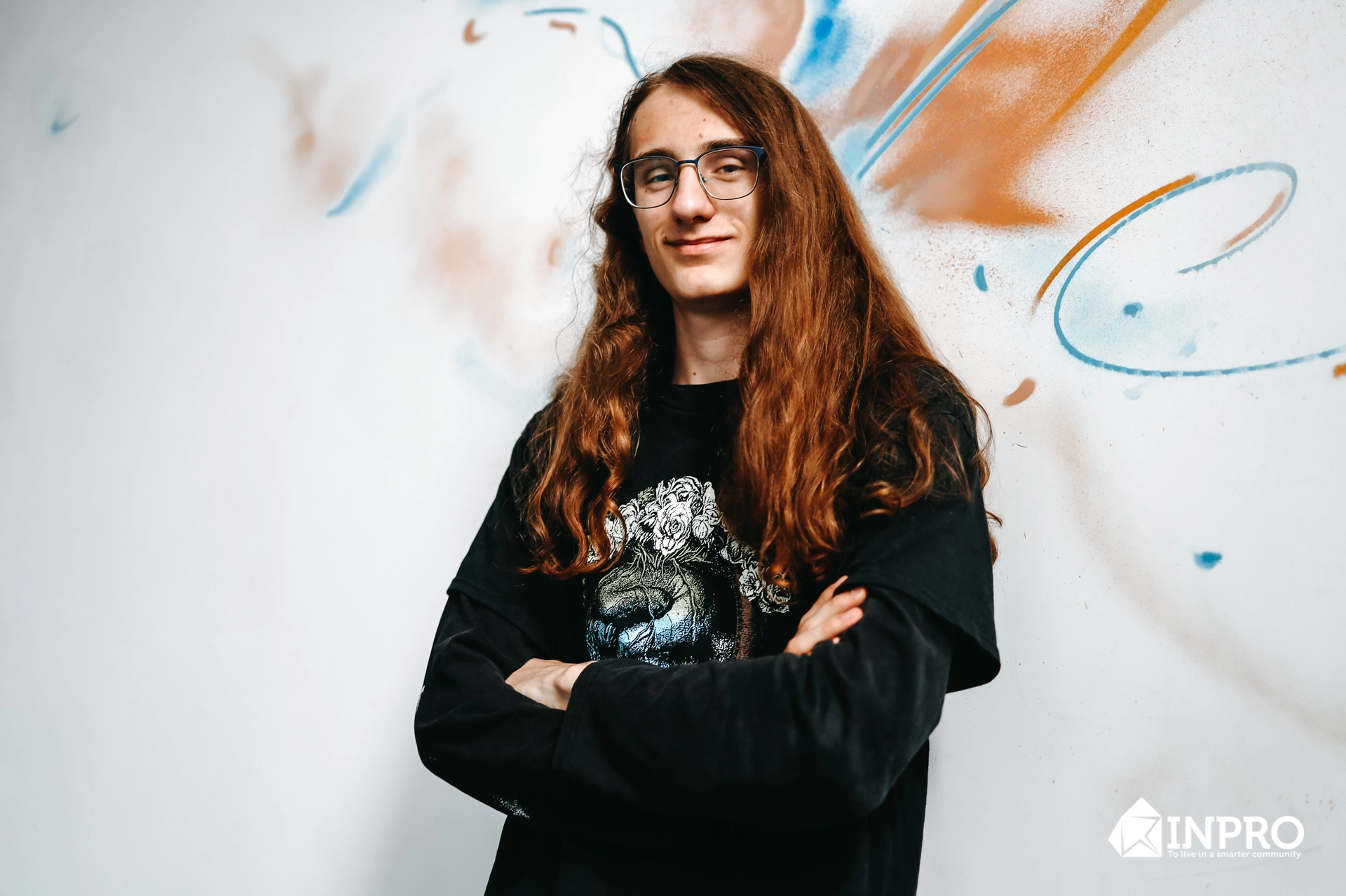
2025-01-17

Hi! My name is Torben, I come from Germany and I am currently living and working in Rzeszów, Poland as a volunteer from August 2024 to March 2025. One of my main tasks at INPRO is conducting school visits that we organise for many schools in Rzeszów and the surrounding area. But what exactly are school visits? Good question, and that is exactly what I would like to tell you about.

Our school visits have one main goal, to support cultural exchange and broaden young people’s knowledge by helping them better understand the diverse world they live in. Nowadays, thanks to social media, globalisation and politics, we are exposed to many cultures and perspectives, yet stereotypes and prejudices still exist. We want to change that. By promoting understanding and empathy, we support students’ personal development and contribute, even in a small but meaningful way, to a more united Europe.

Early in the morning, our team, usually made up of three volunteers, leaves our shared apartment. Sometimes the school is within walking distance, and other times we need to take public transport, but arriving on time is always our priority. Once we get to the school, we conduct several sessions, each lasting as long as a standard lesson. Most of our presentations are about our countries of origin, but we also run workshops on cultural topics and practical skills. Sometimes we work with the same class for several lessons, while other times the groups change every hour. Some days are very busy with sessions one after another, while on other days we may only have one session and wait for the next one.

The biggest challenges often happen outside the school. Navigating public transport in Poland as a group of foreigners can be difficult, but so far we have always managed to arrive on time and we hope it will stay that way. There can also be challenges during the sessions. Students are often shy and not eager to participate, so we start with short energisers and use open questions to encourage engagement. Another challenge is the strain on the voice, especially when leading several sessions in a row. After just a few school visits, I gained a lot of respect for teachers who do this every day.

Despite these challenges, school visits are extremely rewarding. None of the difficulties are impossible to overcome, and they actually make the work more interesting and dynamic. The best part is working with young people. Interacting with children and teenagers is very fulfilling and offers a unique perspective. After each session, I often learn something new myself. Seeing curiosity in the students’ eyes makes every visit worth the effort, and knowing that our work has a real impact brings great satisfaction.

This was a short article about our school visits. Thank you for reading, and if you are a teacher and would like to invite us to your school, please feel free to contact us.