
European Solidarity Corps

The European Solidarity Corps (ESC) is a European Union programme for young people aged 18–30 who want to engage in community work, gain experience in an international environment and contribute to projects supporting local communities. We have been part of the programme since 2016 and have continuously hosted volunteers from across Europe, creating a space for learning, cooperation and meaningful intercultural exchange.

We implement both short-term and long-term volunteering projects. All current calls are published exclusively on the European Youth Portal, where you can find detailed descriptions of each project, including responsibilities, accommodation arrangements and participation conditions. To apply, simply create an account, find our offer and submit your application through the portal — this is the only official recruitment channel.

Every volunteer joining our projects is provided with accommodation, pocket money according to programme rates, financial support for food and reimbursement of travel costs within the limits defined by ESC. Volunteers also receive the support of a coordinator and a mentor, and become part of a dynamic, diverse and engaged environment that we have been building in Rzeszów for years.

The scope of activities depends on the duration of the project. Long-term volunteers support us in organising youth exchanges, training courses and local events, work directly with young people, create photo and video content, manage social media and contribute to the daily functioning of our space. Short-term projects focus mainly on intercultural lessons in schools, sharing one’s culture and designing workshops for students — intensive but highly rewarding experiences that genuinely broaden young people’s horizons in the region.

From the very beginning, we have prioritised quality in our projects. Thanks to our long-standing experience, continuous presence of volunteers and cooperation with local partners, we are able to create an environment where young people learn, grow and make a real impact — while also contributing something meaningful to the local community. If you enjoy taking initiative, embracing responsibility and working in an energetic, intercultural setting, volunteering with us through ESC may be a great choice.

If you are from Poland and would like to take part in a similar project abroad, the process works in a very similar way — just the other way around. Host organisations also publish their opportunities on the European Youth Portal. You simply need to create an account, find a project that interests you and apply directly through the platform. If you have questions, need guidance or would like to understand the process better, feel free to contact us or visit our office. As a sending organisation in the programme, we can help clarify any doubts and support you in preparing for your volunteering experience abroad.
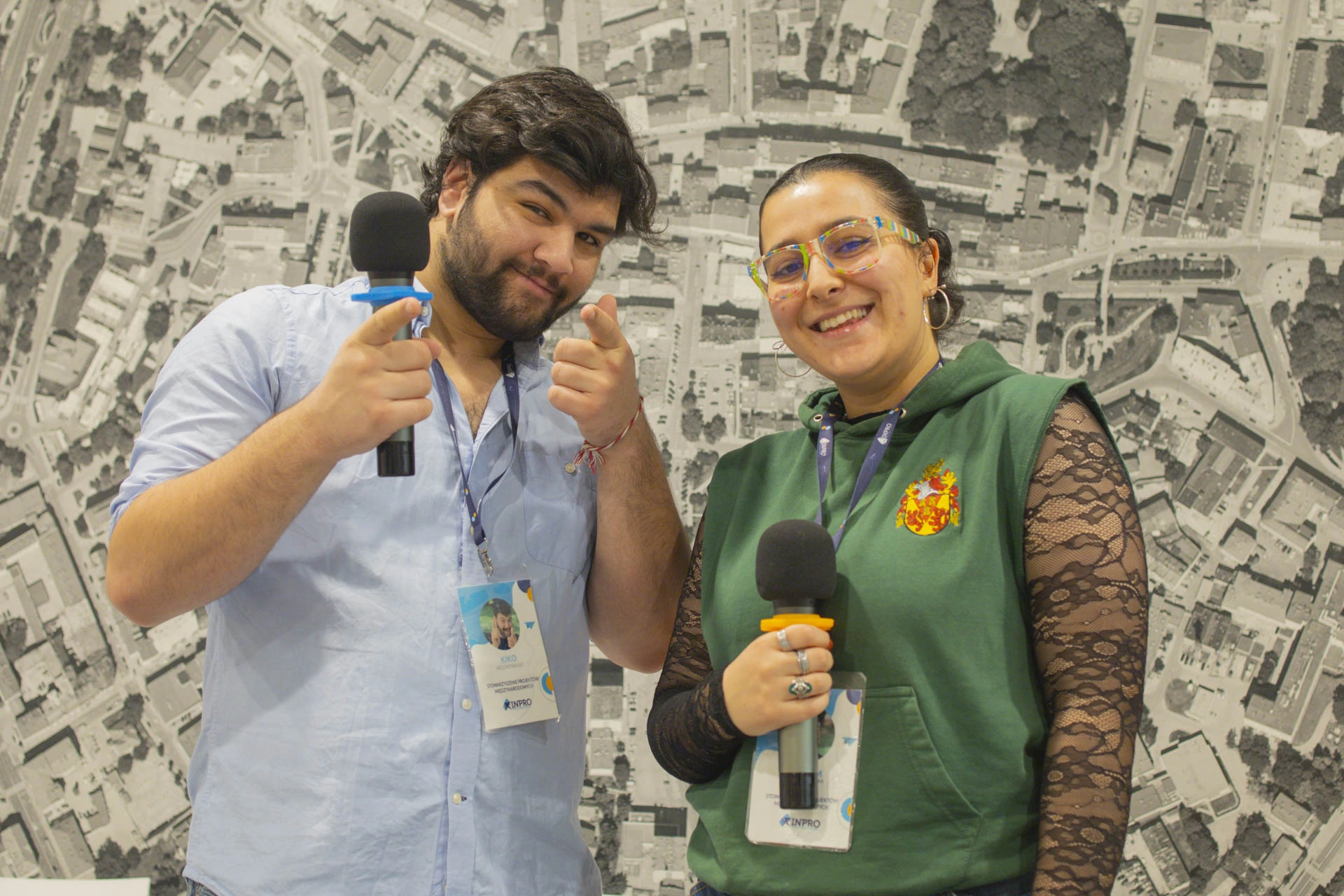
2024-07-23

Exactly one year ago, I was standing at Lisbon airport — nervous, excited and overwhelmed by a million questions running through my head. I was saying goodbye to my family and stepping into the unknown. That “unknown” turned out to be Rzeszów — a city I knew very little about, except that it was somewhere in south-eastern Poland and that this was where my one-year European Solidarity Corps volunteering experience would begin.

When I left the airport and saw the nearly empty parking lot, I realised that a completely new chapter of my life had just started. A short bus ride later, I got off near Galeria Rzeszów and met Gaia — a Spanish-Mexican photographer who welcomed me with the first warm smile of that year. She took me to the apartment that would become my new “home” for the next twelve months.

I was the second long-term volunteer to arrive. That same day, Mariami from Georgia joined us — and at that time, I honestly knew very little about her country. But late-night conversations, shared meals and exchanging stories broke the distance faster than any official ice-breaker ever could. The next day, Erij and Mariem from Tunisia arrived, and the atmosphere in the apartment began to feel surprisingly natural — as if we had known each other much longer than just a few hours.

You might be wondering why I mentioned six volunteers but only named five. The last one — Adrian — was supposed to arrive three weeks later. And he did, walking into the apartment with a suitcase, a relaxed smile and the kind of energy that completed our group instantly. Soon after, we were already on a train to Kraków — our first trip together, first shared jokes, and first “Wait… pierogi with Oreo?” Yes, I tried them. And yes, that was a mistake. Stick to the classics.

As the months passed, our rhythm of life formed around our work at INPRO. Workshops, school visits, events for the local community, VET groups, seminars, trainings — there was always something happening. But each activity carried the feeling that we were doing something real and meaningful. Along the way, short-term volunteers joined us too, bringing new energy, new stories and new accents into the apartment.

Encouraged by INPRO, we started attending Polish language classes. I can honestly say that Polish is still not easy — but it taught me humility, patience and the beauty of trying. Some of the best moments happened when I struggled to say something and people responded with laughter, kindness and understanding. And unexpectedly, I also met other Portuguese people there — and hearing your own language after weeks of missing it? Priceless.

Toward the end of the year, we revived “Monday Stories,” a series of events where participants presented their countries — the beauty, the struggles, the small details you won’t find in guidebooks. Organising each event was a challenge, but also a life lesson: logistics, communication, improvisation. Eventually, we handed it over to the next group of volunteers, confident they would continue it in their own way.

“Open Cafe” became another weekly highlight. Every Wednesday, Urban Lab filled with a mix of languages and cultures. It was a space where relationships formed — relationships that lasted beyond a single meeting. That’s also where I realised how strong and welcoming the local community truly is.

There were spontaneous moments too — like a barbecue at a teacher’s house or reunions with former volunteers who had decided to stay in Rzeszów longer. At some point, I understood that this was what community really means. Not the one written in project documents, but the real, living, human one.

It’s impossible to describe everything I learned during this year. It’s nothing like a lesson in a classroom. You learn it differently — by living among people, by challenging your own limits, by discovering cultures you previously only knew from the internet. The year passed quickly, but it left something lasting: friendships, experiences and stories I carry back home.

And most importantly, the conviction that — as INPRO often says — openness to others truly helps us build a wiser community.

Written by Kiko, European Solidarity Corps volunteer at INPR