
Youth exchanges have something truly special about them. Small groups from different countries come together in one place to spend a few days side by side — working on a shared topic, discovering new things and, most importantly, getting to know one another. Sounds beautiful, right?
And yet, before their first exchange, many young people ask themselves the same question:
“What if I can’t communicate?”
“What if my English isn’t good enough?”
Here’s the most important truth about youth exchanges:
English is only one of the languages spoken there.
Participants find thousands of ways to connect — sometimes through words, sometimes through gestures, sometimes through shared laughter. And sometimes… through images.
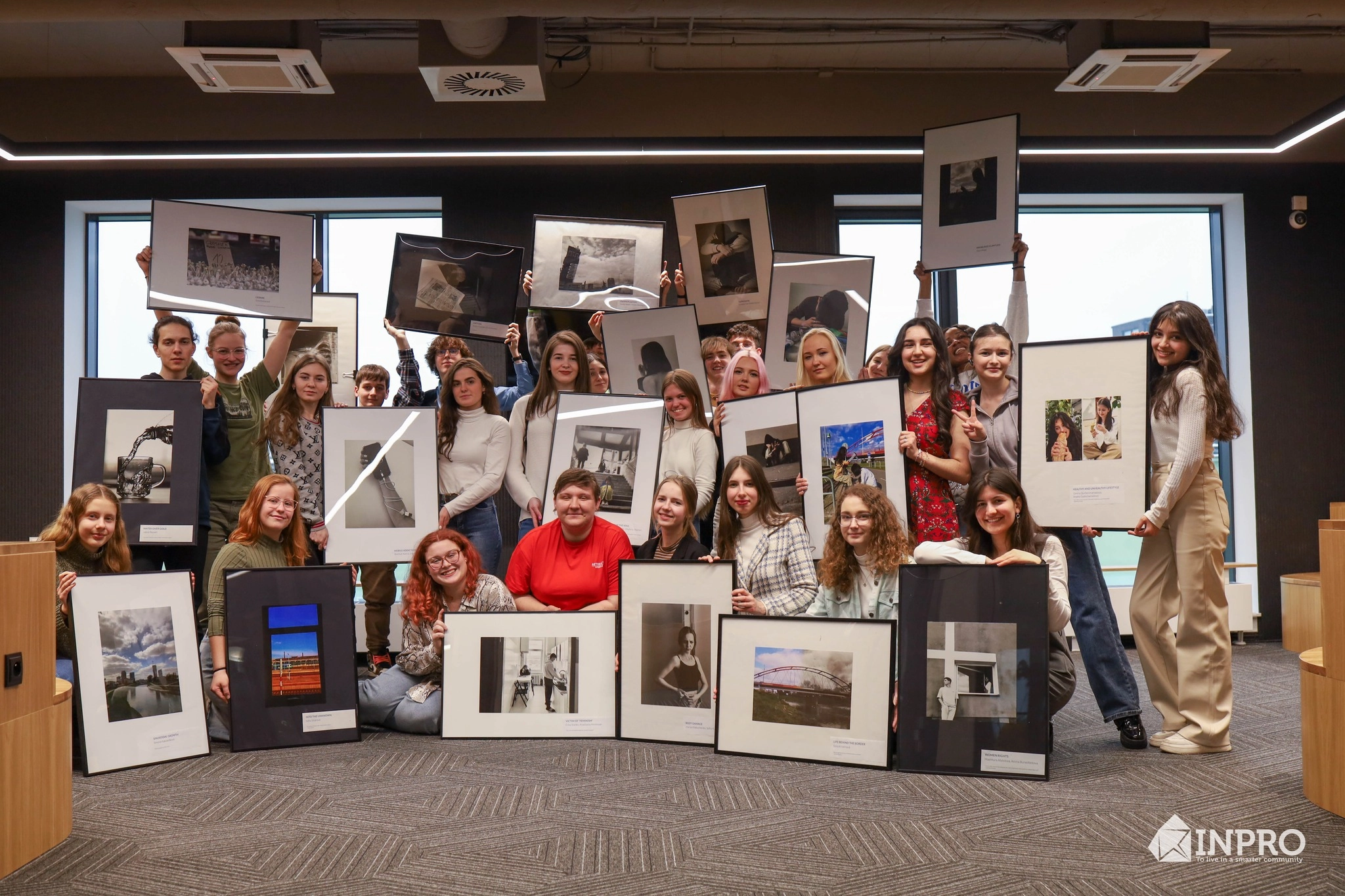
That was exactly the case during our “Zoom in, Zoom out” exchange, which in April brought together young people from Poland, Ukraine, Hungary and Slovakia. For five days, we explored photography — not to take perfect pictures, but to discover how much can be expressed without saying a single sentence. Because when you tell a story through a lens, you communicate something meaningful, even if you don’t know the exact word for it.
Very quickly, participants realised that a camera can be the best translator. One photo can explain what is difficult to put into words. It can highlight a social issue. Capture an emotion. Ask a question that stays with you long after you’ve seen it.
And that’s exactly what happened. Young people from four countries created photographic stories and later presented them at an exhibition at the Podkarpackie Innovation Centre. Each frame was different, yet they all spoke the same language — the language of sensitivity, curiosity and the desire to understand the world.
Beyond photography, there was also time to discover traditions, tastes, habits and — perhaps most importantly — each other. Shared meals, conversations, cultural evenings, small and big discoveries. Like every exchange, it was a beautiful kind of chaos that, in the end, came together into something bigger.
And it all started with one simple idea:
that it’s about finding a way to understand one another.
Not necessarily in perfect English. Not necessarily through words.
Sometimes a photo is enough. Or a look.
And suddenly, language barriers turn out to be much smaller than we imagined.
The project was funded by the European Union under the Erasmus+ programme.