
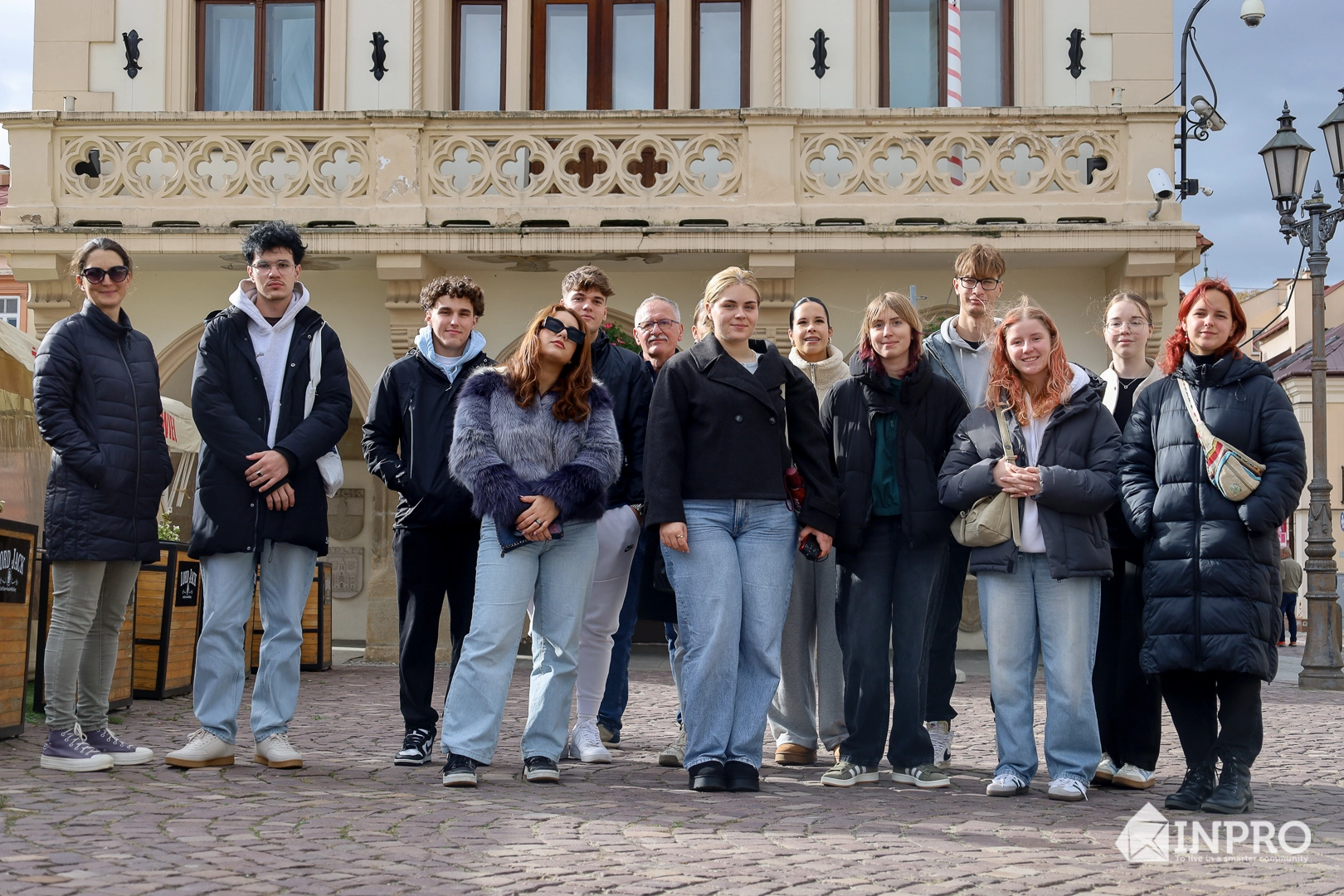
Rzeszów is often described as a city of young people, dynamic, growing and full of new initiatives. But can it also be considered a tourist destination? This is the question that students from Sárvári Turisztikai Technikum in Hungary explored during their three-week stay in Rzeszów as part of the Erasmus+ VET programme. Their goal was to see the city not only as visitors, but above all as future professionals in the tourism and hospitality sector.
From the very beginning, their experience went beyond simple sightseeing. The programme was designed to present different dimensions of the industry, from vocational education to the public sector and private businesses. The students visited institutions such as Zespół Szkół nr 3 in Rzeszów and Zespół Szkół Gospodarczych, where they could observe how future professionals in the sector are trained in Poland. At Hotel Sokół Wellness & SPA, they gained insight into the daily operations of the hospitality industry, while visits to organisations and companies such as Nestlé, the Marshal’s Office of the Podkarpackie Region and Space4Youth provided a broader understanding of how local economy and services function and interact.
Alongside the professional visits, language and intercultural workshops played an important role in the programme. Students developed their communication skills in English and learned how to navigate an international environment, which is essential in the tourism sector. These everyday interactions and shared experiences allowed them not only to gain knowledge, but also to better understand cultural differences and similarities.
There was also time to explore the region. Group trips to Łańcut and Kraków gave participants the opportunity to experience places important to the history and culture of southern Poland and to look more closely at the region’s tourism potential.
After three weeks, the answer to whether Rzeszów is a tourist city remains open. Perhaps not in the traditional sense, but it certainly proved to be a place where tourism, education and local initiatives come together, creating an interesting space for learning and gaining experience. The project was implemented within the Erasmus+ programme, which enables young people to gain practical skills and explore different professional perspectives in an international context.